When the Masking Fluid Refused: Ujwal's Painting
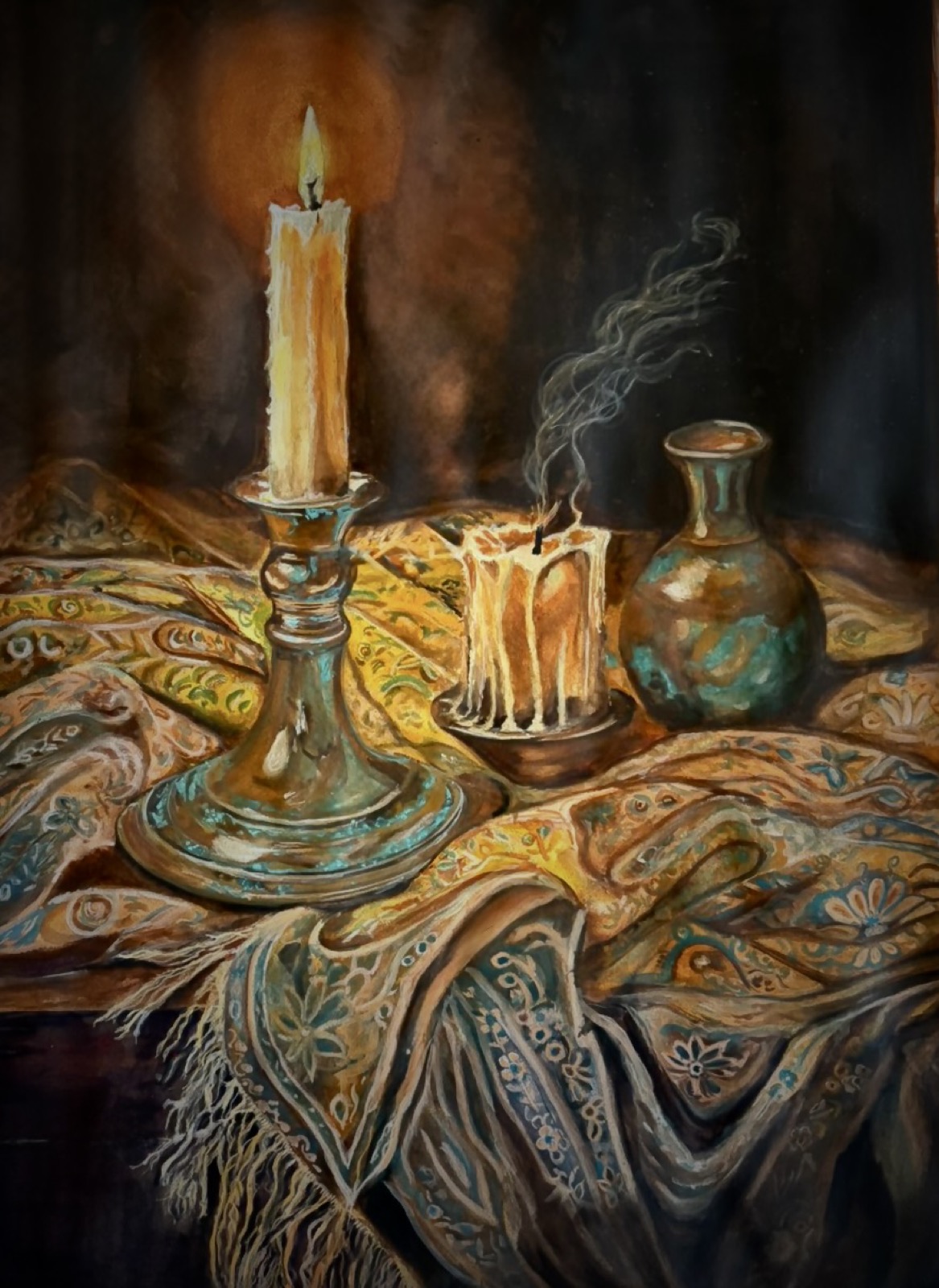
Ujwal was painting her second watercolor project, and she had given it real time — a background built in patient layers, the folds of a muslin cloth drawn and modelled until they held light the way cloth actually holds light. Then came the moment every watercolorist knows as a small ceremony: lifting the masking fluid. It would not come.
If this has happened to you, the cause is usually not your technique. Masking fluid bonds permanently when the paper's sizing — the gelatin layer that seals the cotton — is faulty or uneven, or when the fluid has been left on too long in humid air. The latex keys into the exposed fibres and becomes part of the sheet. No eraser, no rubbing, no patience will negotiate with it. On Ujwal's paper, the sizing was the problem, and the blue fluid had become a resident.
She had two options. Start again on fresh paper — honest, clean, and costing her everything already made. Or the second option, the one I gave her as her mentor: keep the paper, accept the stain as a fact of the painting, and find the strongest finished work that could exist inside this new constraint.
It is worth pausing on how that choice feels from inside. The first option protects the original vision. The second admits the original vision is gone — and asks whether the painting in front of you might have a different one. Most of us protect the vision. It is the plan we already loved, and abandoning a plan feels like abandoning competence itself. But paper does not care about our plans. It only offers conditions.
Ujwal chose the conditions. She looked at the blue residue for what it was — not failed masking, but a color already committed — and glazed it toward the green of oxidized copper. The stain became patina. The plain white muslin, which the mask was supposed to preserve, could no longer be plain; so she decorated it, and the cloth became a patterned scarf with a history, richer than the untouched white she had originally planned.
Copper does the same thing, which is why the metaphor arrived so naturally in her painting. Exposed to weather, copper does not stay wounded. It converts the attack into a surface — verdigris, the green we now protect on cathedral roofs and old statues as if it were the point all along. Chemistry calls it corrosion. Architecture calls it character. The difference between the two names is only time, and what you decide to do while it passes.
I want to be careful here, because the lesson is not that every accident is secretly a gift. Some paper must be abandoned; some paintings are finished by the bin. The lesson is narrower and more useful: the moment a material refuses you is the first moment you can see it clearly. Until then you were painting your intention. Now you are painting what is actually there. Ujwal's second project taught her something her tenth obedient painting would not have — that a watercolorist's real skill is not control of water but conversation with it, continued even when the water answers rudely.
The painting is still on her table. It is a work in progress, and the image above shows it mid-becoming — the green already settling into its patina, the scarf gathering its pattern. Anyone seeing it now would assume the oxidized copper and the decoration were the design from the first day. Only she knows the scarf exists because a mask refused to leave.
Perhaps that is what mastery accumulates into: a private list of things that went wrong, wearing the public appearance of things that went right. Ujwal is somewhere in the middle of building hers — one stubborn painting at a time.